Helene Van Doninck Memorial Fund
Helene Van Doninck Memorial Fund
The Helene Van Doninck Memorial Fund helps wildlife rehabilitators advance animal welfare and conservation through wildlife coexistence education.
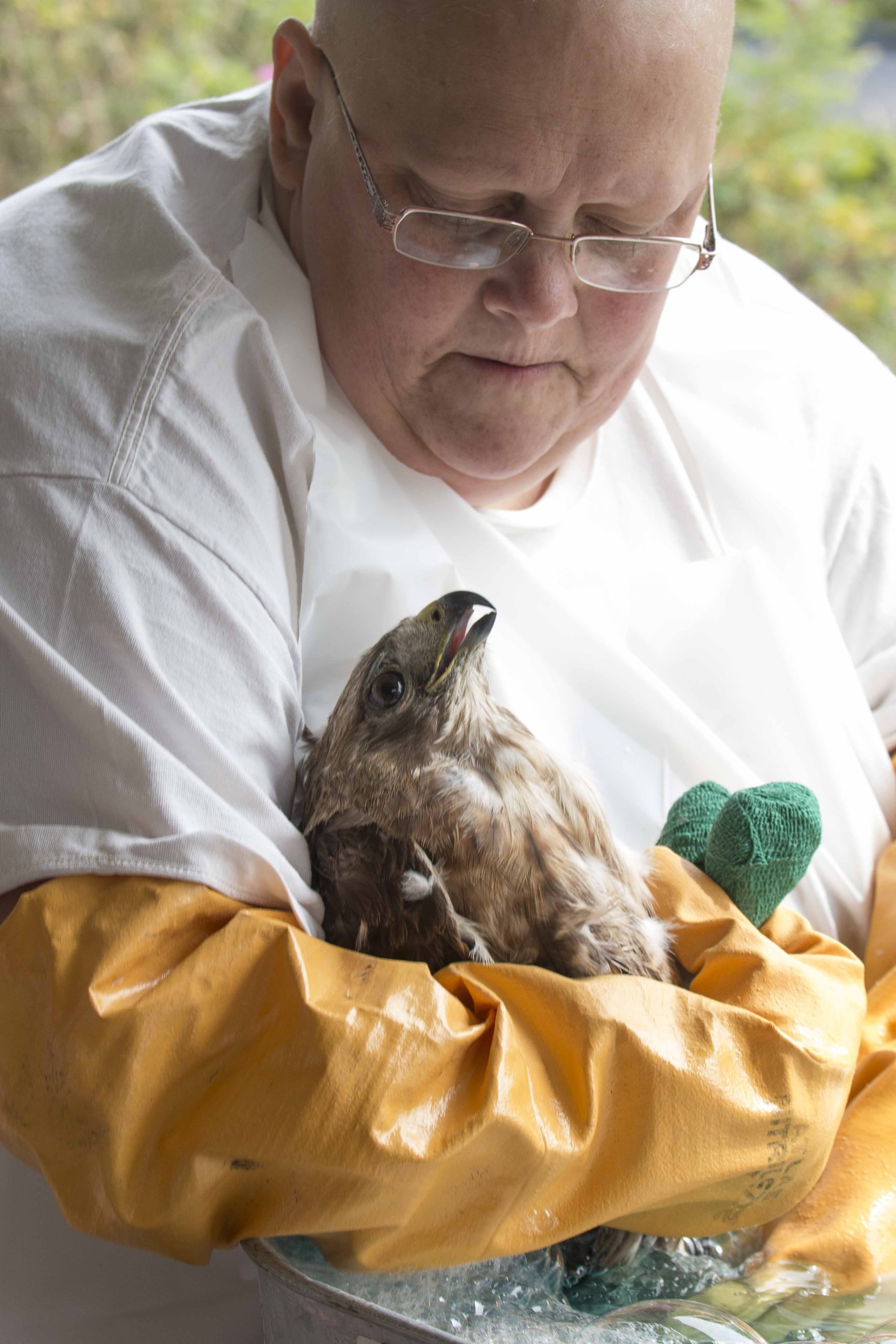 Veterinarian and wildlife rehabilitator, Dr. Helene Van Doninck was passionate about public education, especially regarding the dangers of lead ammunition. The wildlife rehabilitation community has created a fund to remember Helene. IWRC is pleased to manage this fund on behalf of the larger community.
Applicants are encouraged to nominate themselves for this award. The purpose of this fund is to advance wildlife coexistence education and advocacy through a variety of avenues, including funding wildlife rehabilitators to:
- Learn and gain skills in wildlife rehabilitation, public education, and wildlife conservation (for example through books or attendance at trainings or conferences)
- Share information, motivate change, and advocate for wildlife conservation and animal welfare (for example through teaching, creating educational displays or events, or projects to collect and share data around the mitigation of anthropogenic harm)
Dr. Van Doninck leaves a legacy of dedication, creativity, and practicality – she was known to purchase non-lead ammunition and distribute it to help convince hunters to adopt its use.
Applicants are encouraged to think outside the box and propose uses for this fund that will promote real change in their own communities.
The Helene Marie Van Doninck Memorial Fund is made possible through community contributions and the award(s) granted each year may vary depending upon donor support. Award(s) are typically between $50 and $300.
Applications close on OCTOBER 31 in 2026 and will reopen again in late 2027. If you would like to be notified the next time applications open, you can sign up for our mailing list HERE.
For more details, including application criteria, CLICK HERE. To apply, CLICK HERE.
Celebrate and honor Dr. Helene Van Doninck’s dedication to wildlife with a meaningful donation. Your gift will directly support wildlife rehabilitators and the critical work they provide for our most vulnerable wildlife.