Incoming Board Member Interview
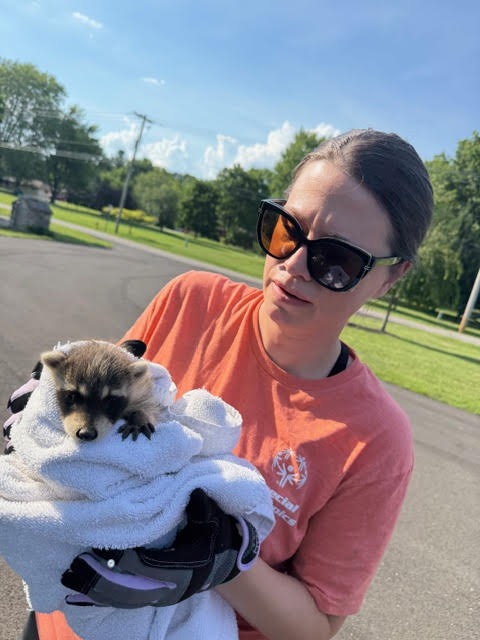
Brittany is a wildlife rehabilitator and experienced chief financial officer with a passion for wildlife conservation. She’s seen first hand how supporting financial stewardship and administrative efficiency helps nonprofits maximize their positive impact on the world, and she wants to leverage her skills to help IWRC build connection and capacity in the wildlife rehabilitation field.

Welcome to the IWRC Board Brittany! Can you share how and why you decided to jump in and contribute at the board level?
As I became more involved in wildlife rehabilitation, IWRC quickly stood out as a trusted source for education, standards, and professional development. I value IWRC’s commitment to evidence-based care and its role in supporting rehabilitators across diverse regions and regulatory environments. When the opportunity arose to serve at the board level, it felt like a natural extension of both my rehabilitation work and my professional background. Board service allows me to support IWRC’s mission by contributing governance, financial stewardship, and operational expertise in service of rehabilitators and wildlife worldwide.
So many of us can trace our passion for wildlife back to our childhoods. How did your personal relationship to this work develop?
From a young age, animals were a constant source of comfort, curiosity, and grounding for me. I was always the child paying close attention to the animals around me – whether watching birds, caring deeply for pets, or feeling a strong sense of responsibility when I encountered injured or vulnerable animals. That early connection fostered both empathy and respect for wildlife and stayed with me into adulthood, even when my professional path initially led elsewhere. Over time, that lifelong love of animals naturally evolved into a desire to support wildlife more directly through hands-on rehabilitation.
Now, as an adult, how do you see your interests and goals intersecting with IWRC’s Mission?
I am particularly passionate about advancing ethical, evidence-based standards of care and ensuring rehabilitators have access to high quality education and resources. Wildlife rehabilitation often operates at the intersection of compassion, science, and public trust. Supporting rehabilitators with consistent guidance, training, and professional standards not only improves animal outcomes but also strengthens the credibility and sustainability of the field as a whole.
Is there anything you’ve done in your career you are particularly proud of?
One of the most significant accomplishments of my career has been serving in the U.S. Army and later applying that experience in senior leadership roles within government and nonprofit organizations. During my career, I had the opportunity to work in complex, high-accountability environments, including participating in large-scale budget planning and negotiations at the federal level. Those experiences strengthened my ability to balance fiscal responsibility, mission priorities, and ethical decision-making skills that continue to shape my approach to nonprofit governance and stewardship today.
Do you have any companion animals in your life at the moment?
Animals have always been central to my life. Over the years, I have fostered animals and supported rescue efforts, experiences that deepened my respect for their resilience and individuality. I currently share my home with my fur family, including dogs Stark and Charlie, and Atlas, a recently rescued cat. Living alongside animals daily reinforces my belief in compassionate, thoughtful care and reminds me why both domestic and wild animals deserve respect and protection.
Leave a Reply
You must be logged in to post a comment.