Results from our 2026 Wildlife Rehabilitator Survey are in!
For a visual summary, check out our infographic on our SHAREABLES PAGE – you are also welcome to download and share anything there!
The 2026 Wildlife Rehabilitator Survey was distributed in from December 2025 to March 2026. It was shared in English, Spanish, and in Chinese with the help of the Taiwan Wildlife Rehabilitation and Conservation Association.
We received more than 600 responses from rehabilitators in 33 countries. Here are some of the interesting insights from the responses:
Who are wildlife rehabilitators?
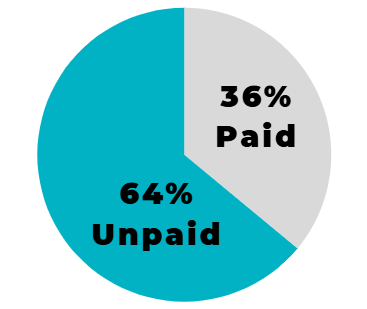
Only 36% of respondents were paid for their wildlife rehabilitation work in the past year. 64% are unpaid!
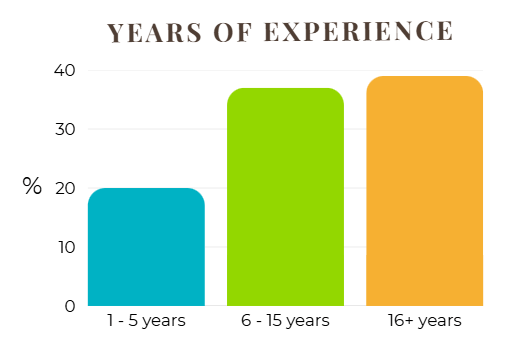
Wildlife rehabilitators generally have a lot of experience! Only 20% of our responders have worked in the field for 5 years or less. 37% have 6-15 years of experience, and 39% have more than 16 years of experience.
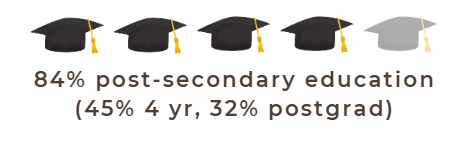
Wildlife rehabilitators are educated! 84% have a post-secondary education: 45% a 4 year degree, 32% have a masters or PhD, 7% have an associates or trade school equivalent.
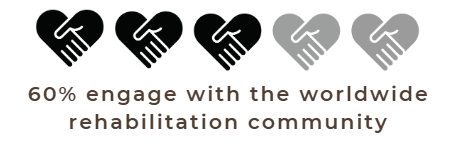
60% of wildlife rehabilitators are involved in a local, regional, national, or international wildlife rehabilitation professional association. We also noticed around the same percentage read the Journal of Wildlife Rehabilitation or participate in live events. So we summarized these findings as engaging with the greater wildlife rehabilitation community.
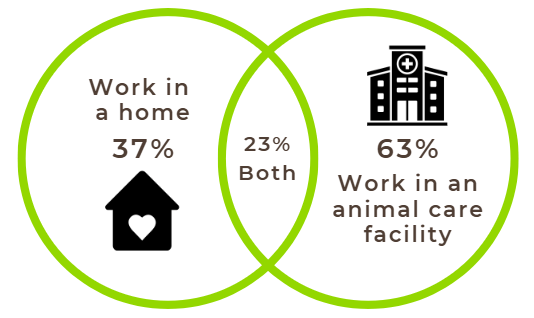
63% of wildlife rehabilitators who work in an animal care facility. A substantial amount of wildlife rehabilitation still takes place in a home (37%). 23% of rehabilitators who work in animal care facilities also perform at least some animal care at home as well.
The impact of wildlife rehabilitators
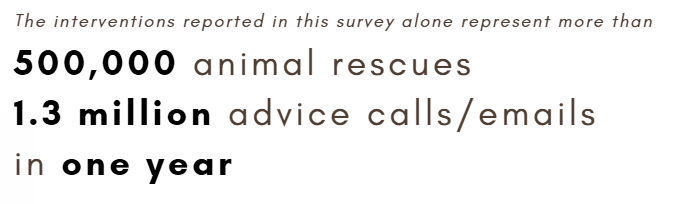
Counting only the interventions reported in this survey, the impact is massive! In just 2025, our survey participants rescued more than 500,000 animals and responded to more than 1.3 million advice calls/emails from the public. Remember, there are many more rehabilitators in the world than the 600 who responded to our survey. Together our impact is massive!
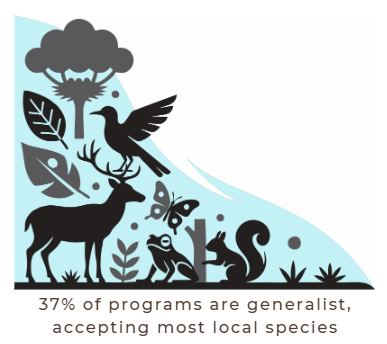
Some wildlife rehabilitation programs specialize, caring for only one species or group of species (63%). Others (37%) are generalists and accept a wide variety of local species.
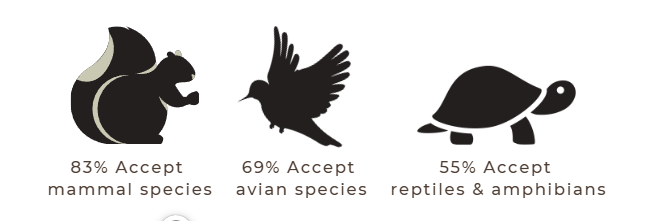
There’s a rehabilitator for everyone! 83% of programs accept at least one type of mammal. 69% accept at least one type of bird. 55% accept at least one type of reptile and/or amphibian.
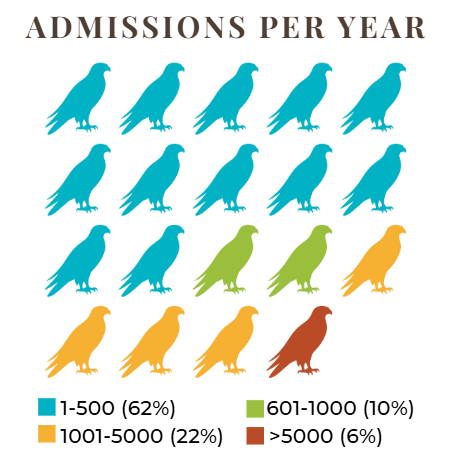
Rehabilitators admit anywhere from a few animals per year to many thousands.
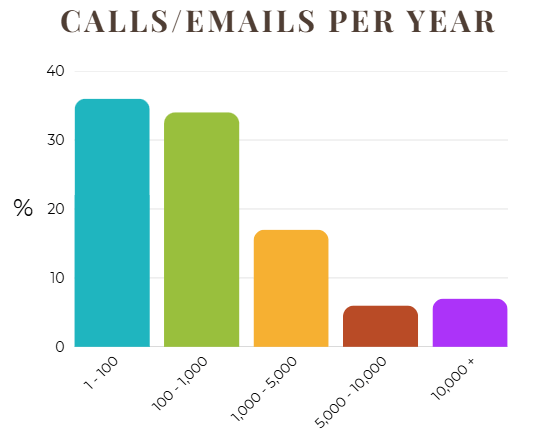
A large part of most rehabilitation program also includes providing advice and guidance to the public. These calls and emails involve evaluating situations and providing rescue instructions. They also often include troubleshooting and providing human solutions to wildlife conflict issues, like when an animal dens in an attic or under the porch.
Wildlife Rehabilitation Programs

While many rehabilitators work independently ( 31%) the majority are part of larger organizations. These organizations are mostly non-profit. Only 40% of organizations have paid staff, and a large proportion of staff (58%) hold multiple roles in their organization. “Multiple roles” includes situations where staff members are responsible for many of the program’s functions such as animal care, administration, personnel management, and facility maintenance. It also includes staff that work part time in wildlife rehabilitation but also have responsibilities to other organizational programs, such as permanent captive care, education, retail or other paid services, etc.
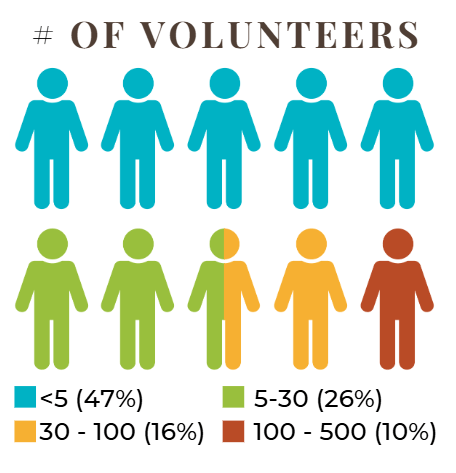
The 2026 Wildlife Rehabilitator Survey showed 94% of wildlife rehabilitation programs rely on volunteers. The number of volunteers each program needs varies.
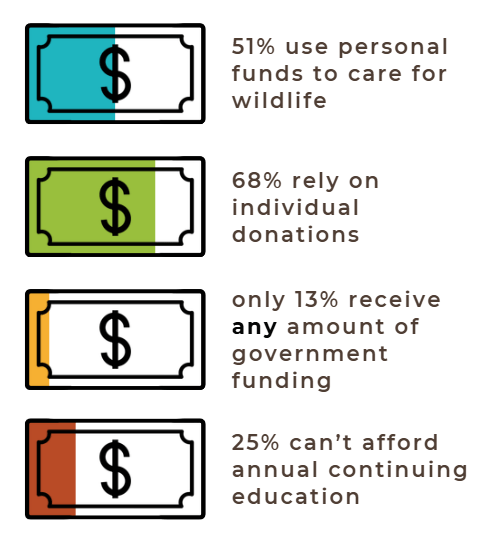
Wildlife rehabilitation programs often struggle to find sufficient funding. Most wildlife rehabilitation programs are independent non-profit organizations that receive little, if any, government funding. Only 13% of our respondents receive any amount of government funding, and often government funding includes only small or targeted governmental grants compared to an organization’s operating budget. 51% of wildlife rehabilitators use their own personal funds to continue caring for wildlife. 68% of programs rely primarily on individual donations. It is rare that grant or foundation funds can can be applied to daily operational costs like food, or staff salaries, which make up the bulk of the costs of wildlife rehabilitation services.
Wildlife rehabilitation is a relatively new, and constantly growing field. There are always new approaches and discoveries that can help improve the welfare of the animals in our care. Yet 17% of wildlife rehabilitators have no budget for ongoing training, and a further 8% have a budget of less than $100 per year, for their entire program.
IWRC works hard to keep costs of our classes as low as possible, and offer free resources as often as possible. But we face many of the same funding struggles as our members. We know times are hard for everyone, but if you have the means to DONATE, you can make a difference for wildlife rehabilitators – and the animals they care for – around the globe.
Leave a Reply
You must be logged in to post a comment.