Wildlife rehabilitators need solid biosecurity practices to protect themselves and their patients, and they also act as sentinels on the front line of emerging disease detection. In this Coffee & Tea discussion, guests share firsthand experience from three timely events: the WRMD wildlife morbidity and mortality surveillance work developed with the California Department of Fish…
Project Category: Webinars
Project
Interacting with the Public
Interacting with the public is one of the most challenging parts of wildlife rehabilitation, and skills in this area are an important part of every rehabilitator’s toolkit. In this Coffee & Tea session, Jayanthi Kallam uses her center’s wildlife conflict mitigation work as a window into dealing with the public, from listening for the real…
Project
Rehabilitating from Home
Operating a wildlife rehabilitation center out of a personal residence presents a unique set of logistical, financial, and emotional challenges. In this Coffee & Tea session, an international panel of home-based rehabilitators discusses the realities of sharing their living spaces with wildlife patients. The conversation covers how to establish boundaries when the work is 24/7,…
Project
Strategies for Reopening After COVID-19
As wildlife rehabilitation centers navigate the ongoing COVID-19 pandemic, many are facing the complex realities of reopening, managing volunteer restrictions, and maintaining funding amidst global uncertainty. In this Coffee & Tea session, an international panel of rehabilitators discusses their unique challenges and strategies for operating during the pandemic. The conversation covers the strict social distancing…
Project
Impacts of Highly Pathogenic Avian Influenza on a Previously Unaffected Vulture Species
This Coffee & Tea wildlife seminar was recorded on October 30, 2026. Since 2021, an unprecedented epizootic of highly pathogenic avian influenza (HPAI) is under way on a global scale. The outbreak is marked by a loss of seasonality alongside an explosive increase in geographic rang and host species. More than 320 wild bird species…
Project
2026 Annual Membership Meeting
This meeting was recorded on October 14, 2026. The following are resources and links mentioned throughout the recording: IWRC Shareables: http://theiwrc.org/resources/sharablesCourse Host Inquiry Form: https://forms.gle/SE4Y5NhGzK9jsM78AIWRC Online Raptor Reuniting & Wild Fostering Class: https://theiwrc.org/product/reuniting-raptors/

Project
Dial “W” for Wildlife Part 2: More Tips for Wildlife Hotlines
This Coffee & Tea wildlife seminar was recorded on August 20, 2026. Wildlife rehabilitators don’t just care for wildlife; they also offer guidance and educate the public on topics ranging from from how to safely contain injured wildlife to how to humanely discourage wildlife from living in your attic. Many wildlife rehabilitation programs field thousands…
Project
Highly Pathogenic Avian Influenza (H5N1) Information Exchange 2026
This international panel discussion on Highly Pathogenic Avian Influenza and Wildlife Care was recorded on August 5, 2026. Highly Pathogenic Avian Influenza has recently been detected in southern Australia, which means that this illness has been detected on every continent worldwide. While rehabbers in many areas of the world have had to adapt to manage...
Project
Making Sense of Wildlife Rehab Research
“Making Sense of Wildlife Rehab Research,” recorded on July 8, 2026 as part of the International Wildlife Rehabilitation Council’s Coffee & Tea seminar series. Our speaker is Kieran Lindsey, editor of the Journal of Wildlife Rehabilitation. A research paper in the Journal of Wildlife Rehabilitation and other publications can be a powerful tool for improving…
Project
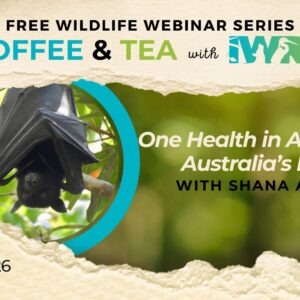
One Health in Action for Australia’s Bats
The Bat Health Focus Group: One Health in Action for Australia’s Bats, recorded on June 23, 2026 as part of the International Wildlife Rehabilitation Council’s Coffee & Tea seminar series. Our speaker is Shana Ahmed of Wildlife Health Australia. For more than 20 years the Bat Health Focus Group (BHFG) has worked together to improve…